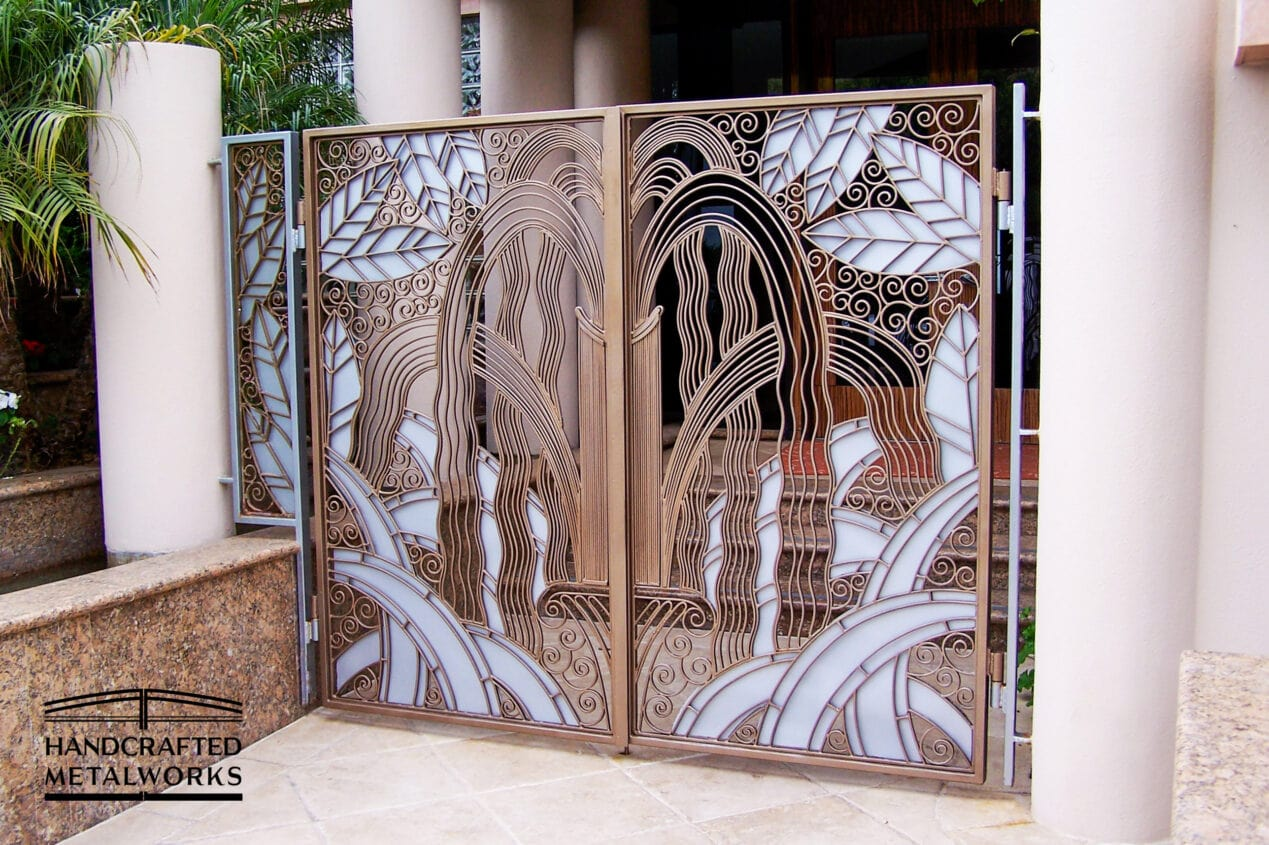
A driveway gate looks simple from the outside. Two panels, some hinges, maybe a motor. But once you start planning one, you realize there are a lot of decisions hiding under the surface.
At Hand Crafted Metalworks, we’ve installed enough driveway gates to know where people usually get stuck. Not in style. On the practical stuff. Space, slope, access, and long-term use. The things you only notice after the gate is already there.
If you’re thinking about adding a driveway gate, here’s what you should know before anything gets built.
This sounds basic, but it shapes everything.
Some people want privacy. Some want security. Some just want a cleaner entrance. Others want all three.
A gate built mainly for security is designed differently than one built mainly for looks. Heavier steel. Tighter spacing. Different locking hardware. More attention to how it closes and seals.
If the goal is visual, you might choose a lighter design, more open pickets, and less bulk.
We always ask this first. Not to sell anything. To avoid building the wrong gate for the wrong reason.
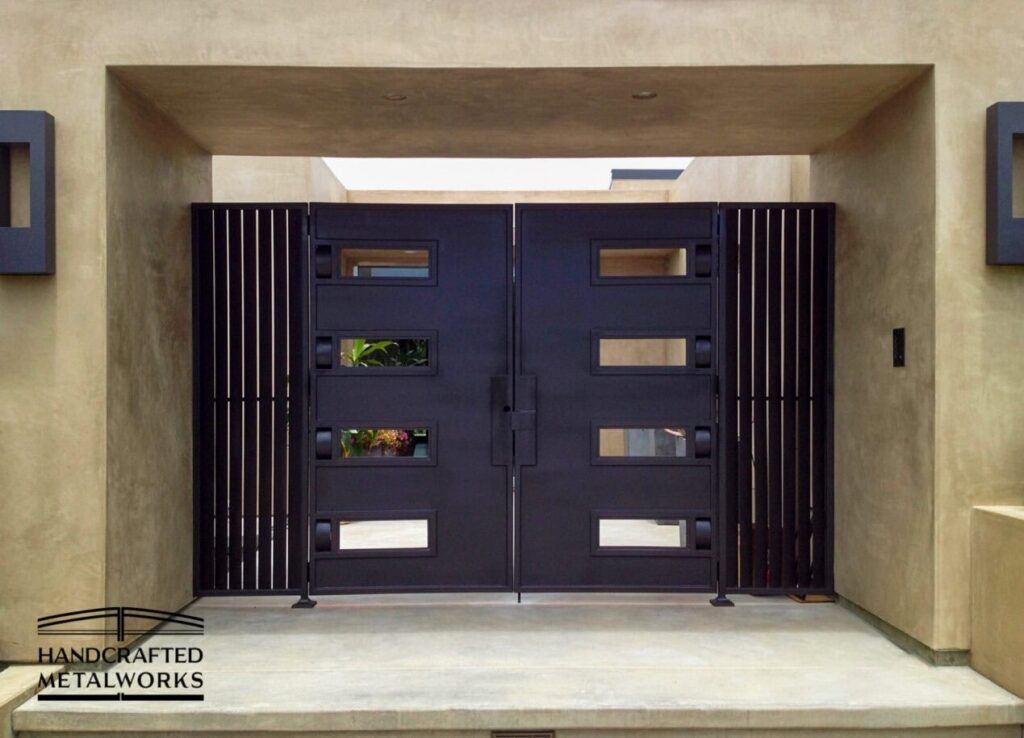
Width and height are obvious. But they’re not the whole story.
You need swing clearance. You need room for posts. You need to know what the driveway does when it rains. You need to check if the ground slopes, even slightly.
A small slope can change everything. A swing gate on a slope may scrape. A sliding gate may need more track work than expected.
We measure the space, but we also watch how cars approach, turn, and stop. A driveway gate that blocks easy turning becomes annoying fast.
This part is not glamorous. It’s necessary.
People often choose this based on looks. That’s a mistake.
Swing gates need clear space in front of or behind them. If your driveway slopes up toward the gate, a swing can become a problem. If there’s limited depth, swing may not work at all.
Sliding gates need side clearance. They need straight runs. They need proper foundations for the track or cantilever system.
We decide this based on the site, not preference. A gate that fights the layout will never work smoothly, no matter how good it looks.
This is where regret usually comes from.
How often will the gate open each day? Who uses it? Do delivery drivers need access? Do you need a separate pedestrian entry?
If you open and close the gate ten times a day, small design choices matter. Handle height. Latch feel. Speed of movement. Noise.
Some people forget about manual operation. Power outages happen. Motors fail. You still need to open the gate without struggling.
A driveway gate should feel easy to live with. Not impressive only from the street.
Planning a driveway gate and not sure what works for your layout?
Get a Custom Gate Consultation
This part matters more than people think.
A moving gate is heavy. It can hurt someone if poorly designed or installed. That’s why safety features exist. Sensors. Stops. Proper clearances.
This is also where guardrail design sometimes comes into play. On sloped driveways or raised edges, a guardrail tied into the gate system can prevent vehicles from drifting where they shouldn’t.
We treat this seriously. A gate is not just decoration. It’s a moving structure. It has to be predictable and controlled.
Steel thickness. Tube size. Hinge type. Finish system.
These choices decide how long the gate stays straight, how often it needs adjustment, and how well it handles weather.
Thin steel saves money at first. It also bends sooner. Light hinges wear faster. Poor finishes rust, stain concrete, and look bad in a few years.
We build gates to stay aligned. That means proper material, even if it costs a bit more upfront.
Cheap gates are expensive later.
The moment you add a motor, the gate design changes.
Weight matters more. Balance matters more. Stop points matter more. Wind load matters more.
We design gates differently when automation is planned from the start. Reinforcement goes in the right places. Frames are sized for motor force. Wiring paths are planned early.
Retrofitting automation later is possible. It’s rarely ideal.
If you think you might automate in the future, design for it now.
People focus on the panels. We focus on what holds them up.
Posts must be sized correctly. Footings must go deep enough. Soil conditions matter. Drainage matters.
A strong gate on weak posts will sag. Always.
We engineer posts as part of the system, not as an afterthought. This is where long-term performance is decided.
Wind. Sun. Salt air. Heat.
In coastal areas, finishes must resist corrosion. In hot areas, expansion must be allowed for. In windy zones, surface area becomes a real load.
In Orange County ironwork, we design for sun exposure and coastal air constantly. A gate built for one climate may fail in another.
Local experience shows here.
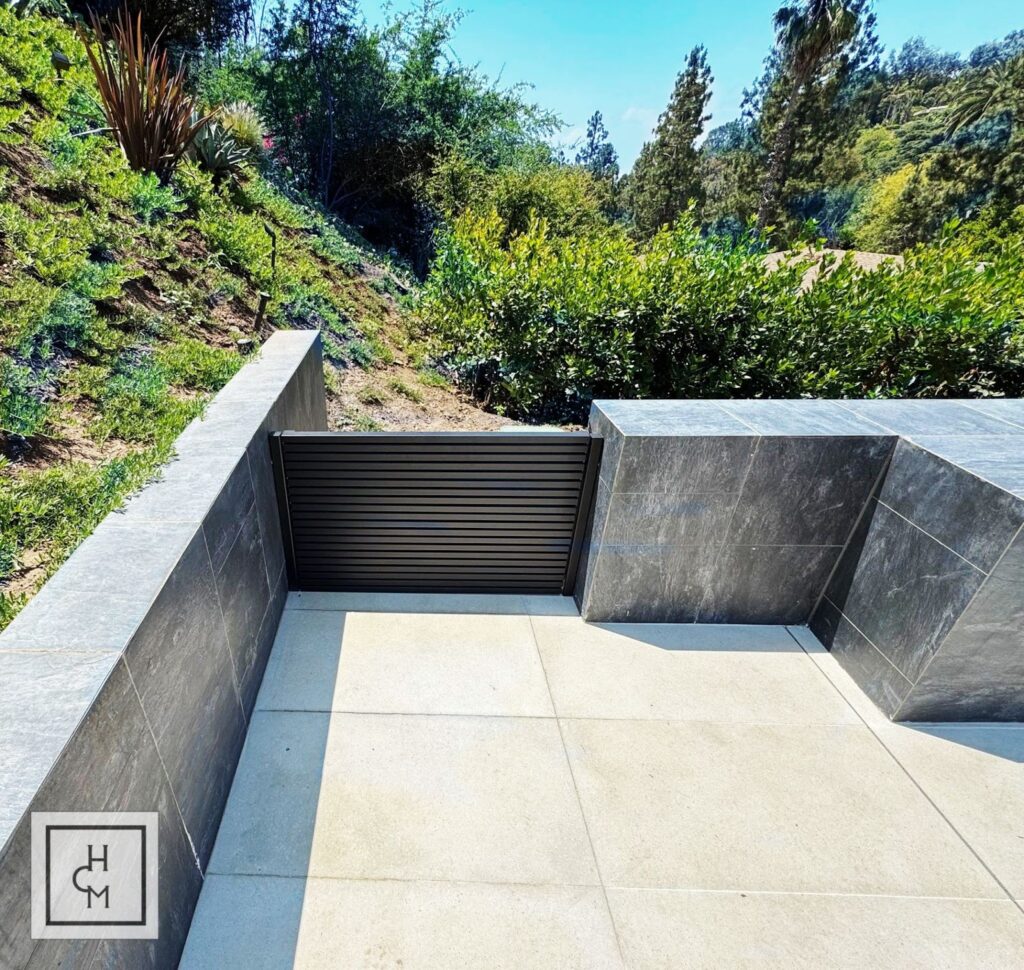
Even a well-built gate can fail if installed poorly.
Alignment. Level. Hinge axis. Motor calibration. Sensor placement.
We install what we build. That’s not a sales line. It’s quality control. If something goes wrong, we fix it because we know exactly how it was made.
A driveway gate should open clean, close clean, and stay that way.
Most problems we see come from rushed planning.
Wrong swing direction. No room for sliding. Posts are set in the wrong place. Automation added without reinforcement.
Fixing these later costs more than designing them right the first time.
At Hand Crafted Metalworks, we plan gates slowly so they work for years. Not just for inspection day.
That’s the difference between installing a gate and building the right one.
Ready to design a driveway gate that actually works long-term?
Talk to Hand Crafted Metalworks
How wide should a driveway gate be?
Most residential driveway gates range from 12 to 20 feet wide. The exact width depends on vehicle size, turning radius, and driveway layout. This is exactly where our team at Hand Crafted Metalworks can help you.
Is a guardrail necessary with a driveway gate?
In some layouts, yes. A guardrail can help guide vehicles and protect edges on sloped or raised driveways.
Should I choose manual or automatic operation?
That depends on daily use and budget. Frequent use usually justifies automation, but manual systems can work well if designed properly.
How long does a custom driveway gate last?
With proper materials, foundations, and maintenance, a custom driveway gate can last decades.